FLT NEWS : End of second period newsletter
Dear parents,
As the end-of-year holiday season approaches, so do the second school holidays. We hope that the second term went very well for you and your children.
 At the end of each term, we prepare a short newsletter to keep you informed about the highlights of the past weeks and upcoming events.
We hope you enjoy reading it, and as always, please feel free to reach out if you have any questions or comments.
We wish you a Happy Holidays!
Summary of the First CSD (Secondary School Council) – November 18, 2025
Parent representatives: Mrs. Després, Mrs. Mahjoubi
School management staff: Mrs. Campels, Mr. Ragouvin, Mr. Jublot
Student representatives: 2 students
Summary of selected agenda items
Start-of-year review – Secondary school
- 786 secondary students this year as of November 10.
- Opening of an additional Terminale class.
Mock exam and exam calendar
Mock exams impact other classes because teachers are mobilized (orals, practical exams, invigilation). Course cancellations should therefore be anticipated.
DNB (3eme):
- Oral exams: June 4–5
- Written exams: dates to be confirmed
- Classes for other secondary levels are cancelled during the exams.
Première:
- French: written exam June 15, oral exams June 22–25
- Mathematics: written exam June 16
Terminale:
- June 2–3: SVT and SPC practical exams
- June 3: BFI Literature written exam
- June 5: BFI History-Geography written exam
- June 8: Philosophy written exam
- June 9–10: Specialties written exams
- June 11–12: LLCER oral exam, NSI practical exam
- June 17–19: Grand Oral
- June 24: First-round results
- June 26: Make-up exams
2nde internships
From June 22 to July 3.
Sports association and club activities
- 22 clubs in addition to the Sports Association (AS), run by students.
- Sports clubs are supervised by a volunteer adult.
- The Sports Association is available from 5eme.
- 6e students remain in extracurricular activities (end of Cycle 3).
Educational projects, outings, and trips 2025–2026
- Annual budget for secondary projects: 2.6 million yen.
- Numerous projects, including:
Class trips:
- 1ere to Hiroshima
- 4eme C and D to Gotemba
Other projects with overnight stays:
- SIMUN Asia in Phnom Penh (December): as many candidates as places
- Prozap Football, Bangkok/Asia, 2nde and 1ere
- Ambassadeurs en Herbe, Canberra, Australia: 5–6 students in March
- Prozap Basketball, Bangkok: 2 teams, 4eme to 1ere, in March
- SIMUN, Singapore, 2nde and 1ere
- Prozap Table Tennis, Kyoto, 6eme to 4eme, in April
- Film Marathon, exchange with Hong Kong, 2nde and 1ere, in December and March
- Prozap Interlanguage Theatre Festival, Hanoi, 4eme
- Prozap Chess Tournament in May in Tokyo: 90 students from the Asia zone
Parents’ questions
1. EVARS Program
The EVARS program is currently part of the curriculum (3 sessions per year). How was it designed by the teaching team, given that it spans from preschool to Terminale and addresses body awareness, consent, emotional relationships, sexuality, gender identity, and the prevention of discrimination and violence? This is a broad and important program that can be addressed by different teachers or external speakers, not only biology teachers as was traditionally the case. How will this be coordinated, and what information will be shared with families?
Response:
Communication will be sent to families, based on official resources on the one hand and differentiated by grade level on the other. The internal program developed last year must be reassessed and revised by teachers in light of the new framework published in 2025, as well as shared among teaching staff.
2. Local Assessment Plan
Could you share the updated Local Assessment Plan for this year? Does it concern only exam classes or all secondary classes?
Response:
The assessment project was finalized before the October break, following updates made by subject teams in line with the service note dated August 25, 2025, and discussed at the Pedagogical Council on October 1, 2025. It applies only to the upper secondary cycle. Final checks were conducted before communication.
It has since been shared with 1ere and Terminale families.
3. TESCIA and Maths+ Mathematics Competitions
At the School Council on May 28, 2025, it was mentioned that the TESCIA mathematics competition organized last year at LFITokyo would not be offered this year if exam conditions remained unchanged. Was feedback provided to the competition organizers regarding the issues encountered in Tokyo and the changes needed? Have you received a response? Parents would like this competition to be offered again to Terminale students, as for some it can be a decisive factor in higher education admissions. Additionally, many Terminale students participated last year in the Maths+ option offered by math teachers on Friday evenings. Will this option be offered again this year, and in what form?
Response:
The significant organizational issues encountered with TESCIA were reported, but no response has been received to date. Without major and clearly identified changes in organizational arrangements, the school will not host the competition again. Furthermore, it is strictly impossible for the school or families to assess the potential weight of this competition in higher education admission decisions. The idea of making the Maths+ program permanent through extracurricular activities was considered, but no proposal has yet been made.
4. Learning Japanese
Many families regret the way Japanese is taught at secondary level since the language reform. Students who are unsure whether they will complete their entire schooling at LFIT are strongly discouraged from choosing Japanese as a second language from 5eme, which forces them to abandon the language, as no alternative instruction in the host country’s language is offered. Some students wishing to take Japanese LV2 in 5eme were redirected to another LV2 because their Japanese level was deemed insufficient, even though they were not beginners and had studied Japanese at LFIT for several years. What does LFIT offer these families? How can students continue to progress in the language of their host country during middle school? What real options are available for students who wish to commit to Japanese but are not yet fluent? Rather than strictly aligning with the French system without considering the specific context of LFIT students, should linguistic interest not come first?
Response:
Japanese as the Language of the Host Country (JLPH) is offered to newly arrived or transient students, notably from the end of 5eme, over a two-year cycle, with the possibility of continuing in high school as an elective language (LVc).
Three LV2 groups were planned in 5eme, but the third was not opened due to insufficient enrollment (only two students, Franco-Japanese, with an insufficient level).
With the language pathway reform, Japanese instruction:
- now meets exam requirements and compulsory language pathways;
- has increased instructional hours (3 hours in LV1, 2.5 hours in LV2);
- is accessible to beginners (JLPH + LVc);
- is offered at an advanced level through the SIJ program;
- is also available through extracurricular activities.
The school is open to working on the possibility of extending JLPH instruction over four middle school years (instead of only two), subject to demand.
Extracurricular activities – Secondary
Could you remind us of the extracurricular offerings for secondary students for the 2025–2026 school year?
Response:
The extracurricular offer for secondary students is diverse: ballet, theatre, instrumental music lessons, basketball (reserved for 6eme, as other levels are covered by the Sports Association), football (reserved for 6eme), judo, and tennis. A Japanese activity is being prepared for Term 2. During school holidays, basketball camps are organized for middle school students (and tennis until last June), as well as two TOEFL and Cambridge exam preparation courses for high school students. In addition, middle and high school students have free access to club activities (22 different activities) and the Sports Association. Overall, the range of activities available is particularly comprehensive, despite the significant constraints linked to the extended school day in secondary education (up to 6:00 p.m., including Wednesdays).
School trips
Parents would like to thank the school for the full-class overnight trips planned this year (1ere trip to Hiroshima and 4eme C and D trip to Gotemba) and encourage teachers to offer such trips to as many classes as possible. Other multi-level international trips are also planned for targeted projects.
- What are the student selection processes for these trips?
- How is the solidarity fund managed, and where can spending traceability be accessed?
Response:
Each year, teachers propose an increasing number of trips for secondary students, and the administration joins parent representatives in thanking them (see agenda). For reference: 2022–2023: no trips; 2023–2024: 2 trips; 2024–2025: 5 trips; 2025–2026: 10 trips, in addition to numerous day trips. Trips are not a pedagogical obligation. Teachers are responsible for selecting students for non–whole-class projects, based on criteria aligned with the educational objectives of each project (e.g., sports selections for Prozap sports, independent selection juries for Ambassadeurs en Herbe after candidate presentations, motivation and commitment, autonomy, choice to participate in only one project, etc.), following a call for applications for targeted grade levels.
The solidarity fund is managed by a committee that includes parent representatives. Financial traceability is the responsibility of administrators, advisors, and auditors, with all Foundation accounts subject to strict controls by both Japanese and French authorities.
Last year, the solidarity fund was used at least once per trip (primary and secondary). Family anonymity is guaranteed during the review of requests.
Against bullying : The pHARe Program in Primary and Secondary Education
Under its accreditation and the agreement that binds it to AEFE, LFI Tokyo implements the French Ministry of Education’s recommendations regarding school climate, in particular through the implementation of the Program for Combating Bullying at School (pHARe).
pHARe is a comprehensive framework for the prevention and management of bullying situations. It includes the reception and handling of reported cases, their processing and follow-up, as well as—and above all—preventive actions.
When appropriate, the program also recommends the use of a non-blaming conflict resolution approach known as the Shared Concern Method (SCM)*.
LFI Tokyo is fully committed to student well-being and protection. Staff members are trained in and make use of all the tools designed to achieve these objectives, and a dedicated team, specifically trained in these frameworks, has been set up for this purpose.
The identification and handling of potential situations also rely on clear and accessible communication.
The tools available—and to be prioritized—for reporting a situation or requesting support are as follows:
- the usual points of contact with primary teachers, homeroom teachers, student life staff, or the school leadership team (for families and students);
- the physical mailbox and reporting form located in front of the infirmary on the main campus (for students only);
- the email address cellule-bien-etre@lfitokyo.org, regularly monitored by members of the pHARe team (for staff, families, and students).
You will find here the organizational chart of the well-being team for the current school year, as well as a summary diagram outlining the protocol for handling bullying situations.
* Shared Concern Method (SCM) – Key Principles
The method is based on the idea that the problem is collective rather than the fault of a single individual.
Process (brief overview):
- Individual meetings with each student involved (without accusation).
- The adult expresses concern for the victim and asks each student how they could help improve the situation.
- Students themselves propose concrete actions.
- Follow-up is organized to ensure that the situation improves.
Objectives:
To stop bullying quickly, encourage student responsibility, and restore a positive relational climate.
The SCM is particularly effective when bullying is established but students remain open to dialogue.
To go further, we also invite you to watch several short explanatory videos on bullying prevention.
In Primary School
Fighting bullying: a concrete example in a primary school – CanoTech
(10 minutes, in French with subtitles)
In Secondary School
- Managing a case of intimidation (3 minutes, in French with subtitles)
- Meetings with the targeted student (4 minutes, in French with subtitles)
- Meetings with the intimidators (5 minutes, in French with subtitles)
Origins, principles, functioning, and implementation of the SCM:
What is bullying? How can we act on a daily basis to address this type of situation?
90-minute conference by Jean-Pierre Bellon, a pioneer in bullying prevention in France.
Summary of the LFIT School Council (CEt) 19 November 2025
Based on notes taken by the parent representatives
Parent representatives:
Mrs Bocquillon, Mr Dumerc, Mrs Hughes, Mrs Mahjoubi
School leadership:
Mrs Campels, Mr Ragouvin, Mr Teissonnière, Mr Jublot
Student representatives:
Miss Kiku Grossas, Mr Haroun Ben Youssef
French Overseas Councillors:
Mr Consigny, Mr Roussel, Mr Seguela
Summary of selected agenda items
Adoption of the minutes of the School Council meeting of 28 May 2025
https://www.lfitokyo.org/images/2025-2026/Novembre/CR-CE-250528.docx.pdf
Mr Dumerc requested the addition of two missing points:
- Clearer communication on post-baccalaureate pathways to Japanese universities
- The absence of a bilateral agreement between France and Japan for the Japanese International Section (SIJ)
The revised minutes were unanimously approved.
Establishment of committees and their representatives
The lists of committee members were unanimously approved.
Annual Activity Report 2024–2025
The activity report for the previous year was provided in advance.
Members of the council congratulated the leadership team on this very comprehensive and positive report.
Mr Dumerc asked for clarification regarding the benefits of video surveillance cameras. It was explained that video surveillance has served as evidence to help resolve conflict situations or thefts.
Mr Roussel noted that at least part of the report could be made accessible to a wider audience. The leadership acknowledged the suggestion and will study this possibility.
Enrollment figures at the start of the school year
The actual enrollment figures as of 10 November were presented.
- Primary: 788 students (810 in 2024), including 163 new students. This made it possible to maintain 8 kindergarten classes, whereas a closure had initially been planned.
- Secondary: 786 students (755 in 2024) across 33 classes, including 75 new students (85 in 2024).
This results in a slight overall increase in student numbers: 1,574 students in 2025 compared to 1,565 in 2024.
This is the first time in the school’s history that the secondary section has reached the same enrollment level as the primary section. The decrease in primary enrollment is explained by a drop in elementary classes (-33 students), while cohort progression explains the effective increase in secondary enrollment compared to primary.
Exams calendar.
The proposed calendar was presented.
- The lower secondary oral exam (Brevet) is scheduled for 4 and 5 June; written exam dates will be announced later.
- Baccalaureate exams will take place between 3 June (specialty exams) and 19 June. Results will be published on the evening of 24 June.
- The School Fair will take place on Saturday 23 May (backup date: 30 May).
This calendar may be modified depending on the schedule of external examinations, which is not yet known.
Sports association and clubs program 2025–2026
The full program was presented.
Differences in objectives between extracurricular activities and the Sports Association were highlighted: they are complementary depending on age and leisure/competition goals, with care taken to avoid redundancy.
Clubs are created based on student demand, with an adult supervisor for sports clubs. Four new clubs are being introduced this year. Some clubs have entry requirements that limit enrollment.
Educational projects, outings, and trips 2025–2026
The extensive list of projects was presented.
The total budget is JPY 5.5 million (JPY 2.9 million for primary, JPY 2.6 million for secondary).
Summary of planned trips at LFIT:
- Primary trips: 18 classes participating, plus an “overnight at school” for first grade (CP).
- Secondary trips:
- A new trip to Gotemba, aimed at strengthening class cohesion
- A trip to Hiroshima for Première
- Two trips for the PROZAP (Asia-Pacific Zone Project), SIMUN
- A new PROZAP interlanguage theatre project in Hanoi for 4ème
LFIT will host the PROZAP Chess event this year (80 competitors).
The list continues with a large number of varied projects, including day trips, etc.
Parents’ Questions
Learning of Kanji (continuation of discussions from previous councils)
The new presentation describing the pace of kanji learning in primary school is available online. However, the pace of kanji learning in secondary school is missing.
https://www.lfitokyo.org/images/2025-2026/Octobre/Parcours_langues_FLTFapeeLFITokyo.pdf
CEFR and JLPT equivalence (continuation of discussions from previous councils)
Request for communication regarding the equivalence between the European CEFR standard used by the school and the JLPT used in higher education and the professional world:
https://www.jlpt.jp/e/about/cefr_reference.html
Bilateral France–Japan agreement on the SIJ (continuation of discussions from previous councils)
After research, it appears that there is no bilateral agreement on the Japanese International Section (SIJ) as provided for by French regulations.
Bullying / school climate (PHARE program)
How is bullying prevention handled within classes? What protocol is applied in cases of bullying?
Response:
The letter sent to parents on 19 November recalls the protocol and provides the email address cellule-bien-etre@lfitokyo.org, which centralizes information. In cases of suspected bullying or for any report, parents are encouraged to write to this address.
We (parent representatives) suggested creating a dedicated menu on the school website to allow quick access to this information. This suggestion was noted and will be studied.
Swimming pool
Students have access to the outdoor pool for only a limited time during the year due to weather conditions, and even on good weather days, issues have been recurring in recent years. Why was the pool closed during the three weeks prior to the autumn break?
Response:
Preventive work is required, including a planned change to the filtration system. The school is aware of the problem and wishes to address it, but this requires construction work and therefore budget planning.
Artificial Intelligence at LFIT
Artificial intelligence is transforming many fields, including education—particularly in middle and high school—where it challenges traditional learning and assessment methods. AI can be perceived negatively or even as a threat by some (student cheating, loss of meaning in homework and individual work).
This raises the question of AI’s place in education in 2025 and beyond: should it be banned, endured, or embraced?
Could AI be used as a pedagogical lever and integrated constructively into educational practices?
In light of these questions, has this challenge already been addressed or has a collective reflection been initiated? Such processes are usually spread over time and involve discovery workshops followed by discussions and reflections to imagine and design solutions. It could also be envisioned to invite parents whose expertise (or that of their colleagues) lies in this field to lead discovery workshops. What is your view on this?
Response:
Teachers are very aware of the topic, and several training programs already exist, which some teachers have followed. It is part of teachers’ responsibilities to train themselves progressively, and the professional development plan reflects this.
Teachers are reflecting and training on how best to use AI so that students learn to use it intelligently and develop critical thinking skills in relation to new technologies.
Image of the school with regard to the neighborhood
A trilingual sign (Japanese/English/French) was recently seen at Shin-Itabashi station, asking users not to obstruct others by walking side by side (particularly middle and high school students). Does LFI Tokyo plan to communicate with parents and students on this matter?
If so, could additional points be included in this communication, such as:
- For students at the annex: not using private small paths (a sign in French is posted there), but instead using the main road
- Not crossing outside pedestrian crossings, especially not directly in front of school buses
- Taking care of the small maple tree located in the park near the school
This topic is still under discussion with the school, and parent representatives wish to work with the lycée on effective communication toward parents in order to improve safety and respect for rules around the school.
Board of Directors Meeting of Dec 2, 2025 – Assembly of Councillors of Nov 26, 2025
Dear parents,
Your FLT representatives attended the Board of Directors (CA) and the Assembly of Councillors (AC) meetings for the first period.
The main agenda item for both the AC and CA was the proposed 5% increase in tuition fees for the 2026/27 academic year.
The FLT representatives voted in favor, and we wish to explain our position here.
- This increase is regrettable, especially as it follows previous years’ increases, which have been difficult for some families to manage.
- As detailed during the public meeting on February 14, 2025, on financial and budgetary policy, these increases are necessary to rebuild a cash reserve in preparation for future sizable loans. These loans will fund essential real estate transactions, including the purchase of land and the demolition/reconstruction of buildings. The need for these investments to secure the school’s future must be understood by all.
- These increases are also a legacy of past years when tuition fees did not rise, leading to a significant deterioration in the school’s financial situation.
- Our vote followed the presentation of a detailed multi-year budget plan up to 2042. This plan aims to address upcoming real estate deadlines, particularly in 2030, 2040, and 2042, and to prepare for even more distant ones, such as in 2060.
- After reviewing various simulations, which show that any lesser increase would be unsustainable, we understand and support the proposed plan, which ensures the long-term sustainability of LFIT (Lycée Français International de Tokyo). This includes enabling the foundation to acquire real estate assets whose current leases cannot be renewed.
- The plan appears reasonable and is based on conservative assumptions, which gives us hope that future increases will be in line with or lower than projections.
- The need for another increase this year, limited to 5%, is clearly demonstrated. Without it and without this plan, LFIT would face the real possibility of losing access to the football and tennis courts in 2032 and, by 2040, being unable to accommodate students due to a lack of buildings.
- A limited 5% increase is a responsible vote that helps secure LFIT’s future and ensures students are welcomed in good conditions. In the short term, it will rebuild a prudential working capital fund, provisions for major maintenance, and reserves for necessary major works, such as air conditioning the gymnasium and renovating the primary school courtyard.
- However, we continue to believe that the financial burden should not fall solely on families. We insist that efforts to secure alternative funding (corporate partnerships, financial aid from the French or Japanese governments, patron support, etc.) must continue.
- We also emphasized the importance of keeping families informed about the financial situation and projections in the coming years. The administration has guaranteed that a new public information meeting on financial and budgetary policy will be held early next year.
2024-2025 Activity Report
Highlights:
- Numerous sports and other clubs
- PhARE program in place
- Creation of DAIS (Dispositif d’Accompagnement à l’Inclusion Scolaire – School Inclusion Support System)
The administrators commend the richness of school and extracurricular activities at LFIT and believe this section of the activity report should be highlighted.
Back-to-School Review / Pedagogical Structure
At the end of September 2025, LFIT had 1,571 students (1,562 in 2024), with an average of 23.8 students per class (24 in 2024).
- Preschool: 184 students (23 per class) vs. 175 in 2024. Last-minute enrolments allowed the cancellation of a planned class closure, which is a welcome surprise.
- Primary school: 600 students (down from 632 in 2024), leading to the closure of one first-grade class, with 24 students per class.
- Middle and high school: Enrolment continues to increase as cohorts progress: Middle school 488 (vs. 477 in 2024, 24.4 students per class), High school 299 (vs. 278 in 2024). The secondary level has increased from 11 to 13 classes, bringing the ratio to 23 students per class (vs. 23.8 in 2024).
Enrolment growth is slowing after the post-Covid rebound. While these trends need to be monitored, the administration is satisfied with the results. The FLT welcomes these positive figures but urges attention to the decline in preschool enrolment. Efforts to attract students must continue, as LFIT competes with cheaper and more conveniently located Japanese public schools. LFIT families face rising transportation and tuition costs, so incentives to keep students in the French system must be considered.
The AEFE Director General noted that recruiting preschool students is a challenge for the entire network. She praised the school’s outreach efforts and said this mobilization must continue. AEFE’s central services are developing a global preschool plan to justify parents’ choice to join the French network, and the agency will share this with schools.
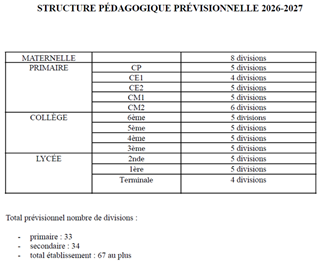
These changes have led to the elimination of some expatriate teaching positions and the creation of local positions, with no net financial impact.
The FLT voted in favor.
Financial Situation
The current year’s financial outlook is better than expected, thanks to slightly higher-than-expected enrolments and reduced maintenance and security costs.
The administration presented a financial projection for 2025-2042, a period during which LFIT will face significant deadlines:
- 2030: End of the lease with the Tokyo municipality for the football and tennis courts
- 2040: Mandatory demolition of the main building (Building B). A new building must be constructed to replace both Building B and the annex. There are options to build the new facility before demolishing Building B to avoid temporary installations.
- 2042: End of the annex lease and return of the land after building demolition
- 2060: End of the emphyteutic lease with the French State for the main site’s land
The proposed plan includes purchasing the land in 2032 and constructing a new building between 2040 and 2042.
Based on stable enrolment and inflation-adjusted cost growth, the plan calls for tuition fee increases in line with the projections presented to parents in 2024 and 2025: 5% in 2026/27, 4% the following year, then 3% for three years, and finally 2%.
Based on this presentation, the CA and AC were asked to vote on the 5% tuition fee increase for 2026/27.
The FLT voted in favor.
AEFE Situation
The Director General explained that AEFE is approaching its extraordinary Board meeting on December 18 in a challenging context. The French State’s subsidy to AEFE in 2026 will be 15% lower than in 2024, while 90% of its budget goes to payroll, with rising costs, especially employer contributions for detached staff pensions. AEFE must implement an ambitious reform and cost-cutting program. A proposal will be presented at the December 18 Board meeting, requesting additional contributions from directly managed and partner schools.
Although not explicitly stated, through information from their federation FAPEE and parliamentary representatives, the FLT understands that it is highly likely that part of the civil pensions for detached staff currently paid by AEFE will be charged to the schools. This will be an additional cost in the budget. According to the administration, the additional cost (not yet precisely quantified) should not require a specific further increase in tuition fees beyond what is planned in the multi-year plan. Nationally, FAPEE, which represents parent associations like ours on AEFE’s Board, will vote against these proposals and examine other measures.
Miscellaneous
School Psychologist
As agreed at the June 2025 Board meeting, recruitment for a school psychologist has begun. The role includes individual counselling, supporting educational teams and students on topics such as stress management and addictions.
Five high-quality applications were received. The selection will consider professional value, language skills, commitment, and ethics, especially ensuring that LFIT students are not part of the psychologist’s private practice.
Two candidates have been shortlisted, and a decision is expected before the Christmas holidays for a January start.
Swimming Pools
This topic was already discussed in the school council.
Studies are underway on the necessary work to improve the availability of the main pool and possibly rehabilitate the annex pool.






 To become a member of the association and enjoy all our benefits during the 2025/2026 school year, visit: https://www.familles-